


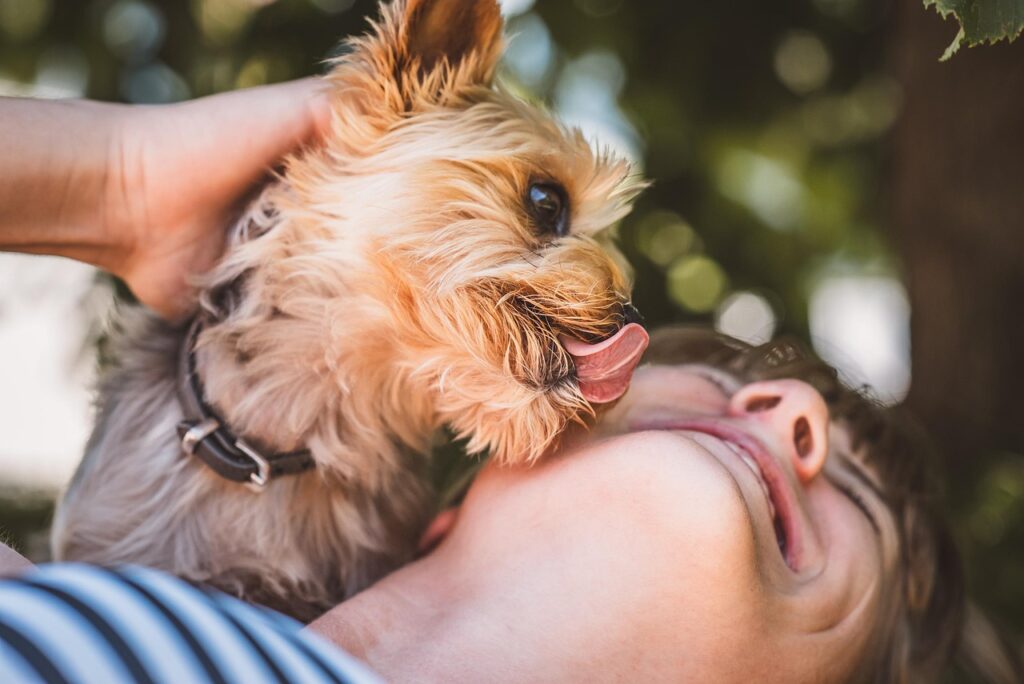
As a dog parent, you have probably received a generous dose of warm licking from your dog. Although licking seems a sign of affection, it signifies more than one behavior. For example, dogs also engaged in face licking and thorough paw cleansing in mosaics of affection, accompanied by kisses.
Understanding the reasons behind your pet dog’s licking behavior is crucial if you want to strengthen your connection and bond with it. It may sometimes enhance the bond of partnership, but in many other instances, it may raise concerns. Let’s examine the factors that enable this charming oddity.
1. It’s a Sign of Love (Sometimes)
Showing affection is one of the most common reasons dogs tend to lick each other. Puppies actively participate in licking their mothers as well as siblings to help bond and continue this in their later life with individuals whom they cherish.
Indeed, as children, we would answer the question of playing with dogs affirmatively when asked, “Is it because you love them?” And when dogs lick our faces after we feed them, they want to communicate, “I love you.”

2. Anxiety Symptoms
Yet another contribution of licking habits is that they highlight symptoms indicating a dog is anxious, worried, or nervous. A good example is a dog licking its paws or the floor during periods of great unease and sensitivity.
If your dog is licking you persistently, you may want to investigate relaxation tactics. You may also want to consider consulting with your veterinarian.
3. Your Flavors Are Intriguing
Dogs tend to lick or explore the world using their mouths. They might be salting or savoring the taste of the sweat you are exuding.
In one way or another, it elucidates what’s happening in the environment around them through licking.
4. Self‐Grooming is an Innate Behavior
Dogs are instinctively known to self-groom with licks. Dogs mend their injuries, clean their fur, or aid in grooming other dogs within the pack.
Moderate amounts of grooming are normal, but excessive grooming can indicate skin allergies,, bug bites,, or injury.
5. Excessive Licking, Fetch Attention
If you respond to your dog’s barking, the dog will likely then fetch whatever you have for them, such as cuddles, food, or treats. Thus, licking gets them what they want.
Training can be deployed to mitigate this behavior if it becomes excessive.
6. Licking is relaxing. The act of licking releases endorphins in dogs and also helps them relax. You may notice your dog licking while trying to nap or during calm-down periods before going to sleep.
It’s similar to their interpretation of a comfort blanket.

When to Worry About Licking
Pets developing habits of licking for extended periods have become widely accepted as non-threatening behavior. However, this behavior may be considered compulsive or excessive due to allergies, injury, boredom, or other more serious underlying issues, such as OCD. In more severe cases, the licking can cause damage to the skin or disrupt daily functioning. It is wise to contact a veterinarian.
Final Remarks
Barking is not the only animal behavior dogs exhibit. Widespread licking appears to be equally common alongside it. Unlike sweeter interpretations of licking, some are bizarre or quite frustrating. Regardless, it goes without saying that the better you attend to the language of your ears about your pup, the easier it will be to maintain their heart, happiness, and overall well-being.